
When the first cold snap hits, a lot of drivers see the tire pressure light come on for the first time since spring. Nothing broke overnight. Air gets denser as it cools, so the pressure in every tire drops, and the car is simply telling you. Here is how to deal with it properly.
Why the light comes on when it gets cold
A tire loses roughly 1 psi for every 5 to 6 degree Celsius drop in temperature. A swing from a mild afternoon to a frosty morning is enough to push a tire that was a little low already under the warning point. Tires also lose a small amount of air on their own every month, so a tire that has not been checked since summer is often the first to trigger the light.
What number to inflate to
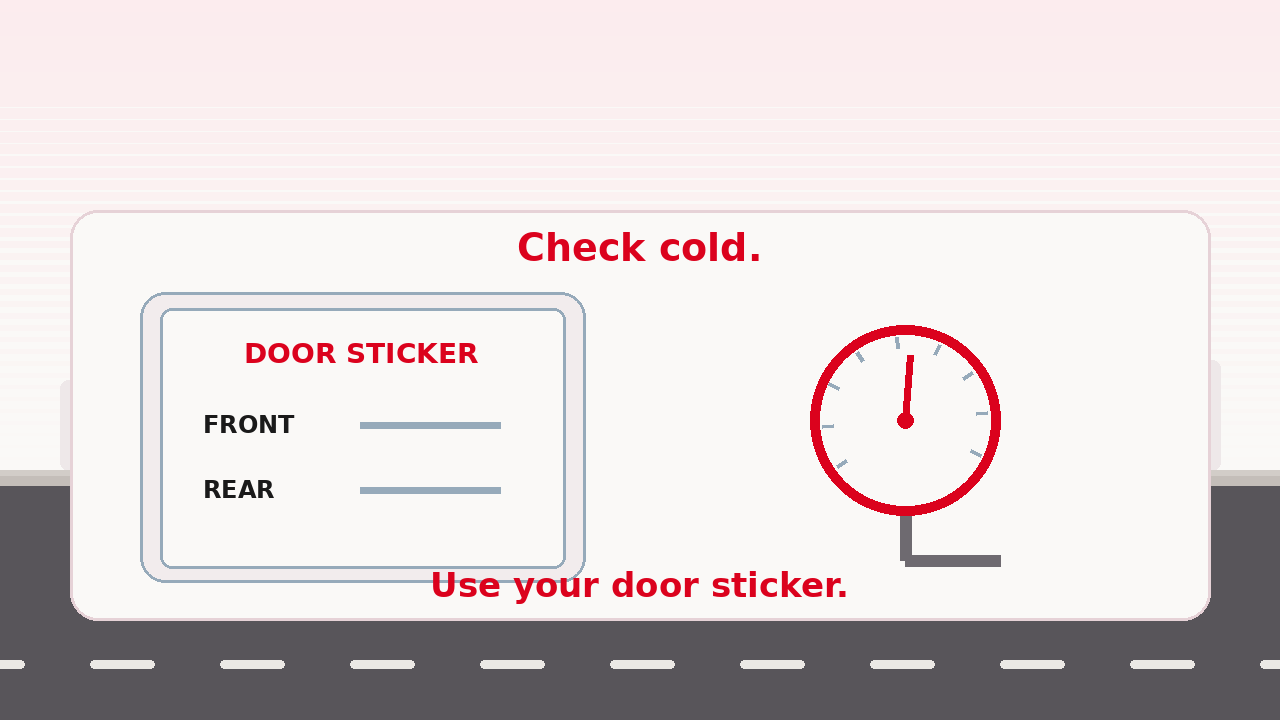
Not the number printed on the tire sidewall. That is the maximum the tire can take, not what your car wants. The right number is on the sticker inside the driver's door frame, and in the owner's manual. It is usually listed for front and rear separately.
- Check the tires cold: before you drive, or after the car has sat for a few hours
- Use a decent gauge. The built-in ones at gas stations are often off
- Do all four tires, and check the spare if you have one
- If you fill up at a warm garage, expect the reading to shift a little once you are back outside
Why it matters in wet weather
Low tires grip worse on wet roads, take longer to stop, wear out faster on the edges, and use more fuel. With the rain and leaf-covered roads we get from October on, correct pressure is one of the cheapest safety checks you can do.
When it is not just the cold
If you top the tires up and the light comes back within a few days, something else is going on. Look for:
- One tire that is always lower than the others, which points to a slow leak, a nail or screw, or a bad valve stem
- A light that stays on after all four tires are at the right pressure, which can be a sensor fault
- Uneven wear, a pull to one side, or a vibration at highway speed, which can mean alignment, suspension or a damaged tire
- A bulge or crack on the sidewall. Do not drive on that tire
A tire that keeps losing air should be looked at, not just refilled every week.
A quick routine for this season
- Check all four tires once a month, and again after a big temperature drop
- Look at the tread. If you can see the wear bars, or the tread is low, plan for new tires before winter
- If you drive up to the Coquihalla or other mountain routes in winter, make sure your tires carry the proper winter rating for those roads
- Walk around the car and look for nails, cuts and bulges while you are there
We come to you
If a warning light is on and you are not sure whether it is just the cold or something that needs fixing, call us. We will ask a few questions, and if it needs a look at your location in Surrey, Langley, Burnaby, Richmond or anywhere else we cover, we can do that. If it needs a tire shop, we will say so on the phone instead of sending someone out for nothing.
Related services
- Tire and wheel service
- Brake service
- Mobile mechanic in Richmond
- Buying a used car? Read the inspection guide
Call (604) 606-7509 and tell us what you are seeing. We come to your vehicle.