
You press the brake pedal and instead of the firm pushback you know, it feels mushy, sinks further than it used to, or needs a second pump to bite. A new change in pedal feel needs immediate inspection, not a road test to see whether it clears. Leave the vehicle parked and arrange help. If you are already moving, focus on reaching a safe stopping place and get roadside help; this guide is not an emergency stopping procedure.
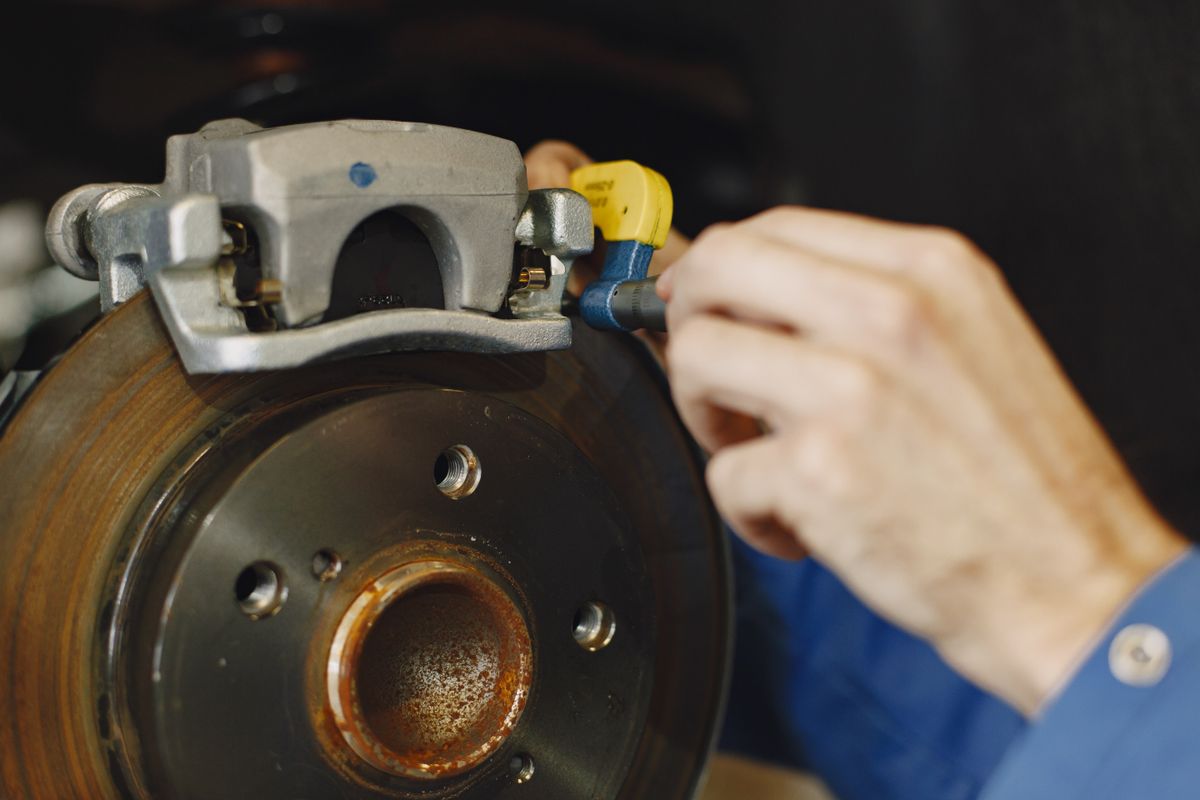
Why a healthy pedal feels firm
In a conventional hydraulic braking system, the pedal pushes brake fluid through sealed lines, and that fluid operates the brakes at the wheels. Fluid barely compresses, so a sealed, healthy system feels solid under your foot. Air, on the other hand, compresses easily. If air or vapour gets into those lines, part of your pedal travel goes into squeezing gas instead of squeezing pads, and the pedal goes soft. That is one reason air in the system can change pedal feel. Modern braking systems differ, so the vehicle-specific procedure matters.
The usual causes
A spongy pedal has a short list of suspects, and they overlap:
- Air in the brake lines. The most common cause, according to the ASE master technician Kelley Blue Book cites. Air can enter through a failed seal, or when the fluid reservoir drops low enough to let air into the system, which worn brake pads can contribute to.
- Low brake fluid. Fluid level can fall as brake pads wear, but a leak also needs to be ruled out. A low reservoir is not a reason to add fluid and assume the brakes are safe.
- A leaking line, caliper, or wheel cylinder. Any leak compromises hydraulic pressure, and a suspected brake-fluid leak needs immediate attention. A telltale is a damp patch where you park, sometimes near a wheel.
- A worn master cylinder. If its internal seals wear, pressure bleeds past them and the pedal can slowly sink even while you hold it.
- Old, moisture-laden fluid. Common glycol-based brake fluids absorb moisture over time. HELLA's technical guidance notes that water content lowers the fluid's boiling point, so under hard braking heat, vapour bubbles can form in the lines, delaying pressure build-up and softening the pedal. Follow the vehicle manufacturer's fluid specification and maintenance schedule. There is no single change interval or fluid type that suits every car.
Which one it is cannot be settled from the driver's seat: air in the lines and a failing master cylinder can produce similar symptoms. Bleeding the brakes is skilled work, not a guaranteed cure. That is what an inspection is for.
Checks you can do without tools
Only with the vehicle securely parked in a safe place, look for information you can pass to the mechanic. Do not get underneath it, remove a wheel, open hydraulic lines, or test-drive it:
- Is the brake warning light on? Note which warning is showing and check its meaning in the owner's manual. Do not release the parking brake just to test a light on an unsecured vehicle.
- Look at the reservoir. If your manual identifies an accessible translucent reservoir, you may be able to read its MIN and MAX marks without opening it. Otherwise leave this to the mechanic. Low fluid is a clue, not a diagnosis, and the fix is finding out where it went.
- Look where you park. Fresh dampness near the inside of a wheel, or a small puddle of oily fluid, points at a leak. Do not drive on a suspected leak.
What not to do: keep driving and see if it gets worse. A brake fault can reduce stopping ability without much warning.
When it is a park-it situation
Some pedal changes mean the car should sit until it is looked at:
- The pedal sinks to the floor, or nearly, before the car slows.
- You have to pump the pedal to get a firm stop.
- The pedal slowly sinks while you hold it at a light.
- The brake warning light is on together with any of the above.
If any of those describe your car, the safe move is to leave it parked and have it inspected where it sits. This is exactly the situation mobile service exists for.
What this means in the Lower Mainland
If the car is parked on a sloped driveway or in a tight parkade, tell us when you call. Access and safe working space help determine whether an inspection can happen there or the vehicle needs to be moved by a towing service. Do not drive it somewhere more convenient just for the appointment.
What a visit looks like
Call (604) 606-7509 and describe the feel: soft, sinking, needs pumping, warning light on or off. We discuss the vehicle and location, then arrange an inspection where mobile work is suitable. Depending on the vehicle, checks may include fluid level and condition, visible leaks, pedal behaviour and relevant fault codes. Some repairs or bleeding procedures need workshop equipment. The repair plan and price are discussed before work starts.
Common questions
Can I drive with a soft brake pedal?
Do not assume it is safe because the car still stops. A new soft, low or sinking pedal needs immediate inspection. Leave the vehicle parked and arrange help rather than driving to test it.
Will topping up the brake fluid fix it?
Do not treat a top-up as a repair or as permission to drive. Low fluid can reflect pad wear or a leak, and the cause needs checking. The correct fluid specification and any filling procedure are vehicle-specific.
Is it the pads, the fluid, or something bigger?
The pedal feel alone does not say. Sometimes the answer is bleeding air or a fluid change on the manual's schedule; sometimes it is a caliper or master cylinder. That is why the first step is an inspection, not parts.
Technical references
- Wagner Brake: causes of a soft or low pedal
- HELLA: brake fluid, moisture and manufacturer procedures
- Kelley Blue Book: spongy brake symptoms and causes
Related services
Call (604) 606-7509 and tell us what it feels like. If it should not be driven, we come to you across the Lower Mainland, 7am to 7pm every day.